
This article was originally published in print in The Land on 15 October 2026.
Why the numbers come first
A survey of technology use on farms confirmed what most growers already know, that they invest when the benefits exceed the costs. When the benefit is uncertain, they hold off.
The reason is arithmetic. Most growers get around 50 seasons in a career, so before introducing another variable with new technology, they need to be close to certain it will pay.
Take GPS-guided equipment, which accounts for around 80 percent of the value of digital technology on an Australian grain farm. One grower in a GRDC case study measured input savings from reduced overlap alone at $7.24 a hectare across 900 hectares, before counting reduced operator fatigue. Autosteer earned its place because the maths worked, and every layer since has had to clear the same bar.
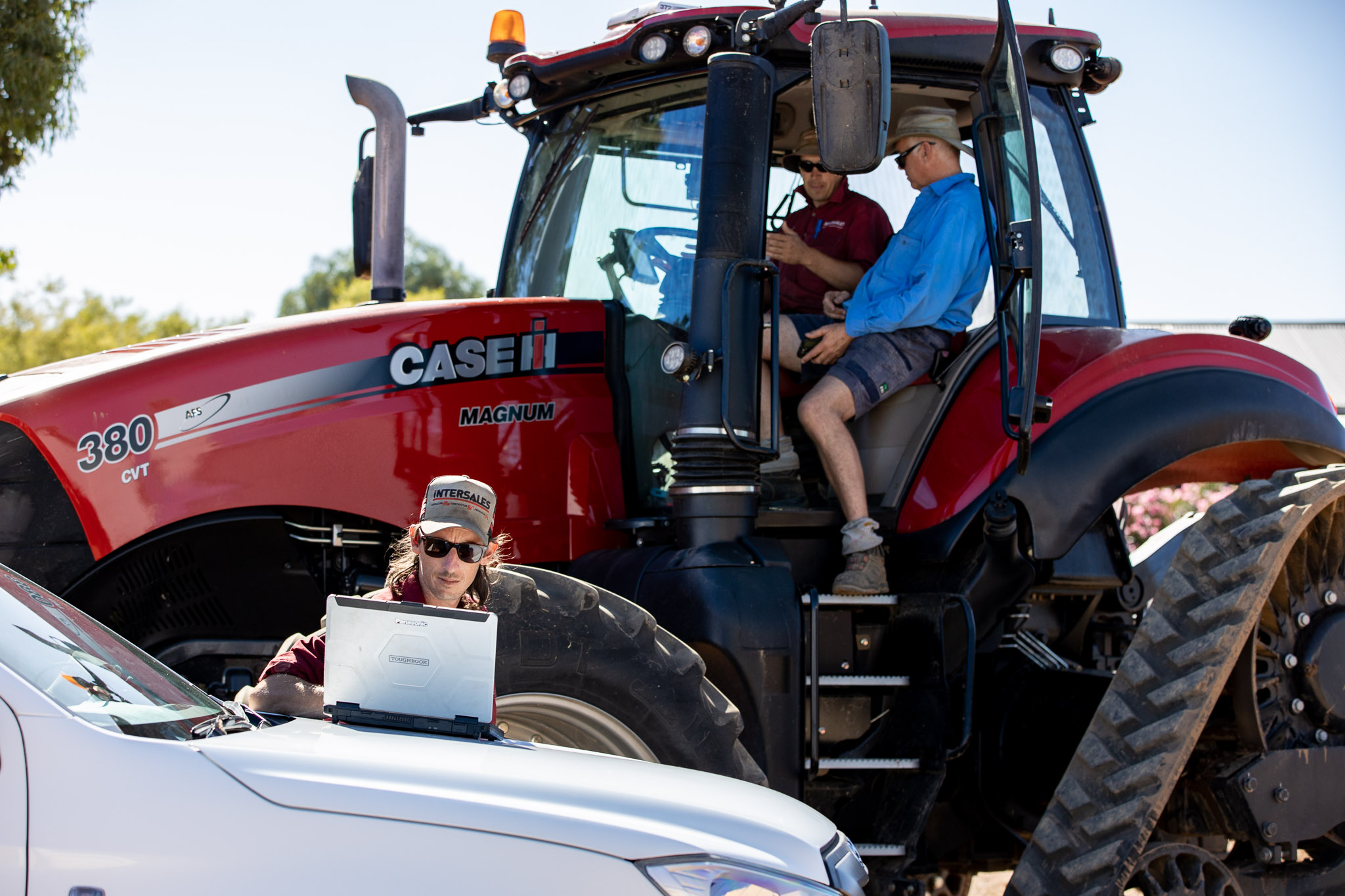
Telematics sits a step behind autosteer and is crossing into the mass market for the same reason. The value lies in how the header, tractors and utes are being used, including how long they sit idling. A diesel engine left idling can burn around three litres an hour doing no work. Better driving with less idling can save 3 to 6 percent of fuel, and on a serious fuel bill, a few percent is real money.
Depreciation is the larger and less visible cost. Every hour on the header's clock adds to depreciation, even when it's sitting idle. Telematics produces the data to track this, and software is now turning it into real-time notifications farmers can act on. The same data also supports safer driving by detecting harsh braking and distracted driving.
A farm that installed telematics for fuel and asset reasons has paid for a connected vehicle, a data path off the property and an analytics layer to make sense of what comes back. The safety layer can build on this infrastructure that has already justified itself.
Coverage is the foundation the whole ladder sits on
None of it works without connectivity. A duress alert or a check-in only returns something if it works where the person is, which is usually the back paddock, not the yard. For anything safety critical, a phone on its own isn’t enough, even with a bar of signal, so a duress call needs a fall back from the mobile network to a dedicated device or UHF. It is the part that's expensive to retrofit, but once solved, it is shared by every layer above it.
Lone worker safety has to clear the same bar, and the numbers stack up. One study found every dollar invested in workplace safety returns about $2.20, while the median serious workers' compensation claim in Australia costs $14,400 and 7.2 weeks of lost time, in a sector already short of labour.
Agriculture carries a high worker fatality rate: 72 people died on Australian farms in 2024, more than double the year before. Work health and safety law requires a business to manage the risks of remote or isolated work, including effective communication with the worker.
The most common mistake is buying a new system for every problem. Zetifi, instead, connects to the telematics already in the vehicle, so the setup that helps reduce fuel use and protect an asset can also support the safety of the person operating it.
Fifty seasons isn't many, which is why every investment gets weighed so carefully. The safety layer helps makes sure the operator is there for all 50, and the farms adopting it first are getting a second return from infrastructure they have already bought.