
Source: Fleet Managers Need To Address Their ESG Metrics In 2026
Warwick Clancy, Chief Operating Officer at Zetifi, discusses why fleet managers must better understand and act on environmental, social and governance (ESG) metrics in 2026.
From July 1 this year, mid-sized enterprises, defined as those with annual revenue greater than $200 million or more than 250 staff, will have to join the top end of town in reporting their ESG efforts.
Another year on, on 1 July 2027, it will be the turn of the next tier down – businesses with $50 million revenue and more than 100 staff.
The legislation has put the onus on businesses to take action and prove they’re doing so.
That means developing a rigorous Environmental, Social and Governance framework and policies, measuring the success of activities to promote optimal social outcomes and reduce the entity’s footprint on the planet, and disclosing progress across all aspects of operations via an annual sustainability report.
Focusing on fleet efficiency
For businesses which run sizeable fleets, minimising their vehicles’ impact on the environment makes excellent sense and it’s an area where progress can be measured and built on in real time, not just reported annually.
Putting formal policies in place that mandate employees drive to conditions and avoid speeding can enable them to create a collective difference over the long term.
That’s because it’s been proven that smooth, safe driving results in lower fuel consumption, fewer incidents and accidents, and reduced wear and tear on vehicles.
Efforts to minimise risky and inefficient driving are more likely to be effective if aberrant behaviours are detected in real time and offending drivers prompted to correct them.
Carbon emissions can be cut by this and other straightforward measures, such as reducing vehicle idling time and facilitating carpooling for workers who need to travel to the same location at the same time.
Measuring what matters
Making changes such as these – and demonstrating you’ve done so – necessitates having access to up-to-date insights into how workers behave when they’re behind the wheel of company cars, utility vehicles and mobile machinery, as well as information on the condition and fuel consumption of those vehicles.
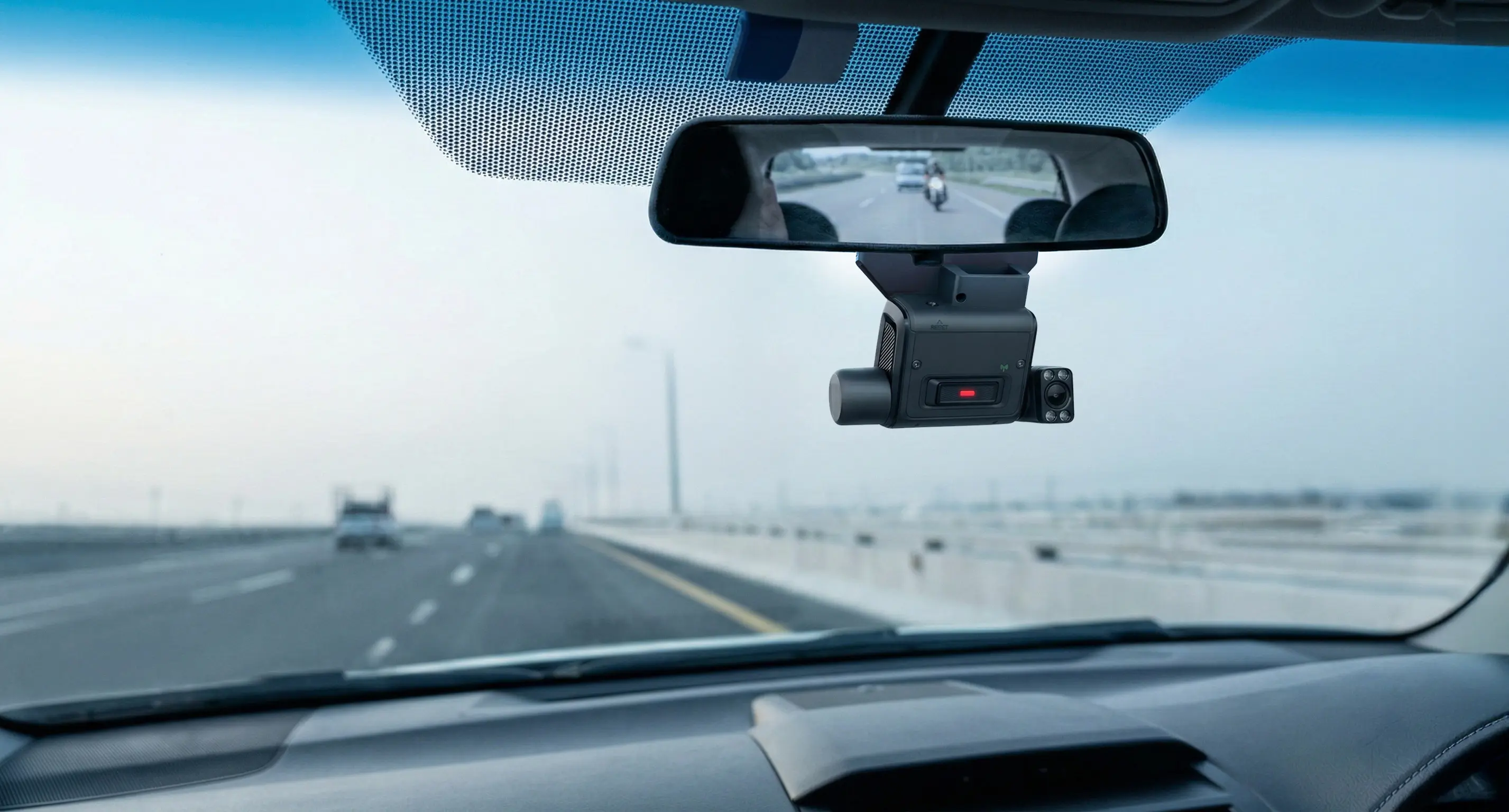
That’s where technology has a vital role to play. When fitted to vehicles, connected trackers and telemetric devices can sense their environments, deliver precise location awareness, capture granular data on how those vehicles are being driven, and create intelligent connections between devices, systems and people.
The signals devices detect and transmit can be sent to the corporate governance team who can use that intelligence to develop comprehensive ESG metrics for the company fleet.
The evidence generated can, for example, be used to build detailed pictures of driver behaviour; identifying individuals who regularly exceed the speed limit and those whose driving patterns are erratic or unsafe.
Interventions can be triggered once pre-determined thresholds have been reached and evidence of offending drivers’ subsequent behavioural changes measured and documented in Environmental and Governance reporting.
Fuel consumption and usage data can also be captured regularly and married with service and repair histories, for every vehicle in the fleet.
Using data to drive ESG improvements
Once in possession of these insights, an ESG team can develop a comprehensive set of fleet metrics and then instigate initiatives to improve them.
A compliance program for individuals who regularly drive unsafely can, for example, be an effective means of modifying their behaviour behind the wheel.
The detection of a risk event in real time means they can be given immediate feedback followed by coaching and counselling, to prevent a recurrence of the incident.
For example, should an employee contravene their employer’s ‘no mobile phone use while driving’ policy, their vehicle’s telemetrics system could detect the breach, prompt a correction, alert their manager, log the real time coaching that occurred and preserve the evidence for ESG reporting purposes.
In the long term, such positive actions can reduce fuel consumption and vehicle wear and tear while lowering the risk of incidents and injuries for the individuals involved and those with whom they share the road.
That’s a social outcome that’s in everyone’s interest, given the devastating impact of serious and fatal accidents on families and communities.
Meanwhile, having the capability to monitor lone worker settings and respond quickly to incidents involving danger and duress make for a significantly safer working environment.
Driving ESG improvements in 2026 and beyond
Monitoring and improving sustainability is a moral imperative for responsible Australian enterprises of all stripes and sizes and a legal one for many.
Fleet operations offer one of the clearest pathways from policy to measurable proof, at a time when reporting expectations demand greater transparency and defensibility.
The smart deployment of tracker and telemetric technology can help businesses reduce the environmental impact of their fleet vehicles, while creating safer conditions for employees and other drivers on the road.
It enables them to not only measure their vehicle emissions but to show the actions they’ve taken to minimise them, while at the same time safeguarding workers and the public.
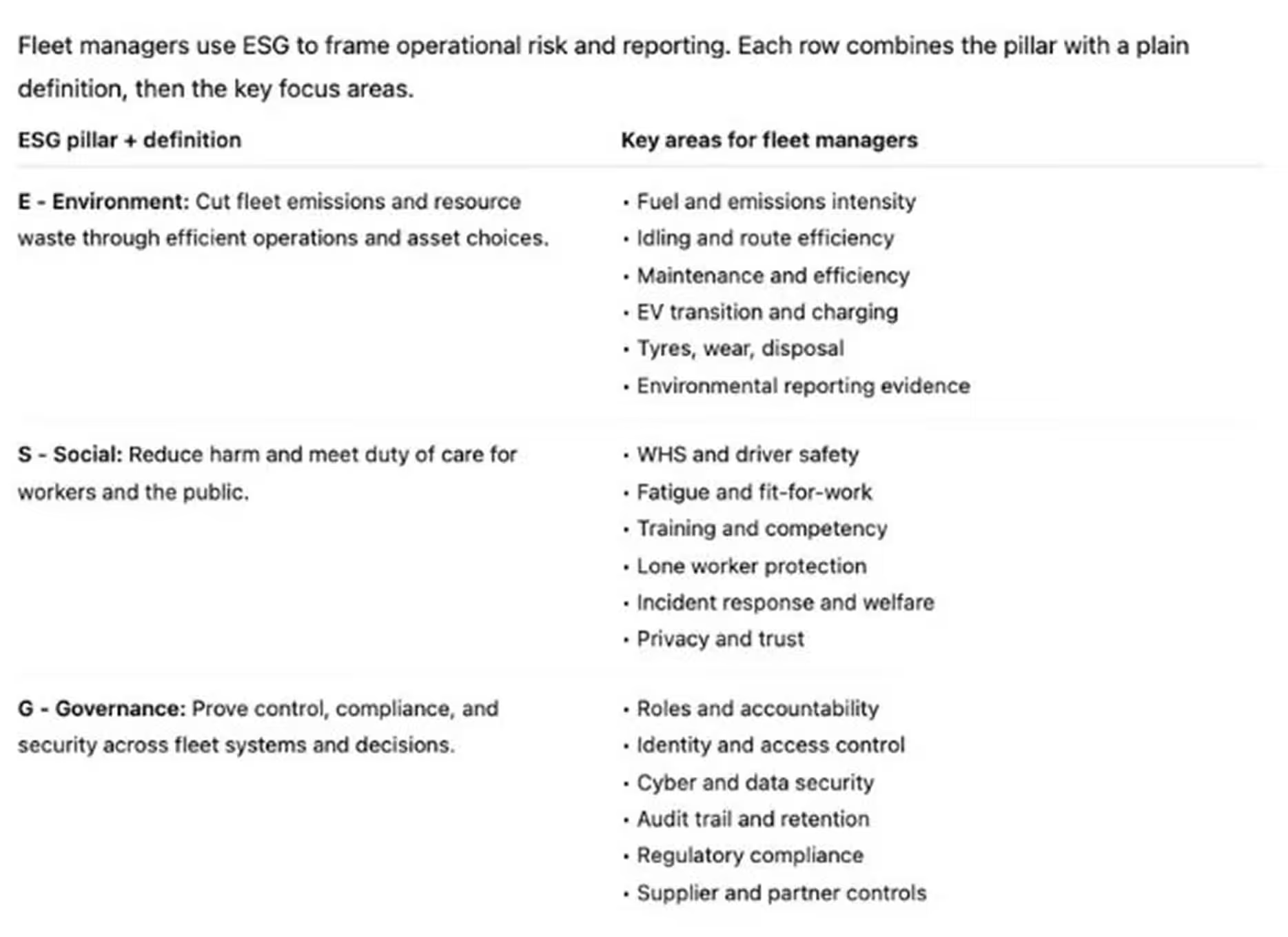
If increasing transparency, managing risk and demonstrating solid environmental and social credentials is important to your business this year, it’s an excellent addition to the company toolkit.
Zetifi’s Smart Antenna platform combines high-performance UHF and 4G/5G antennas with Bluetooth tracking and GPS logging, offering seamless integration into existing telematics platforms.
It delivers the kind of infrastructure needed for real-time carbon accounting and verifiable sustainability metrics as ESG reporting shifts from voluntary to mandatory.